Kendal Bridge
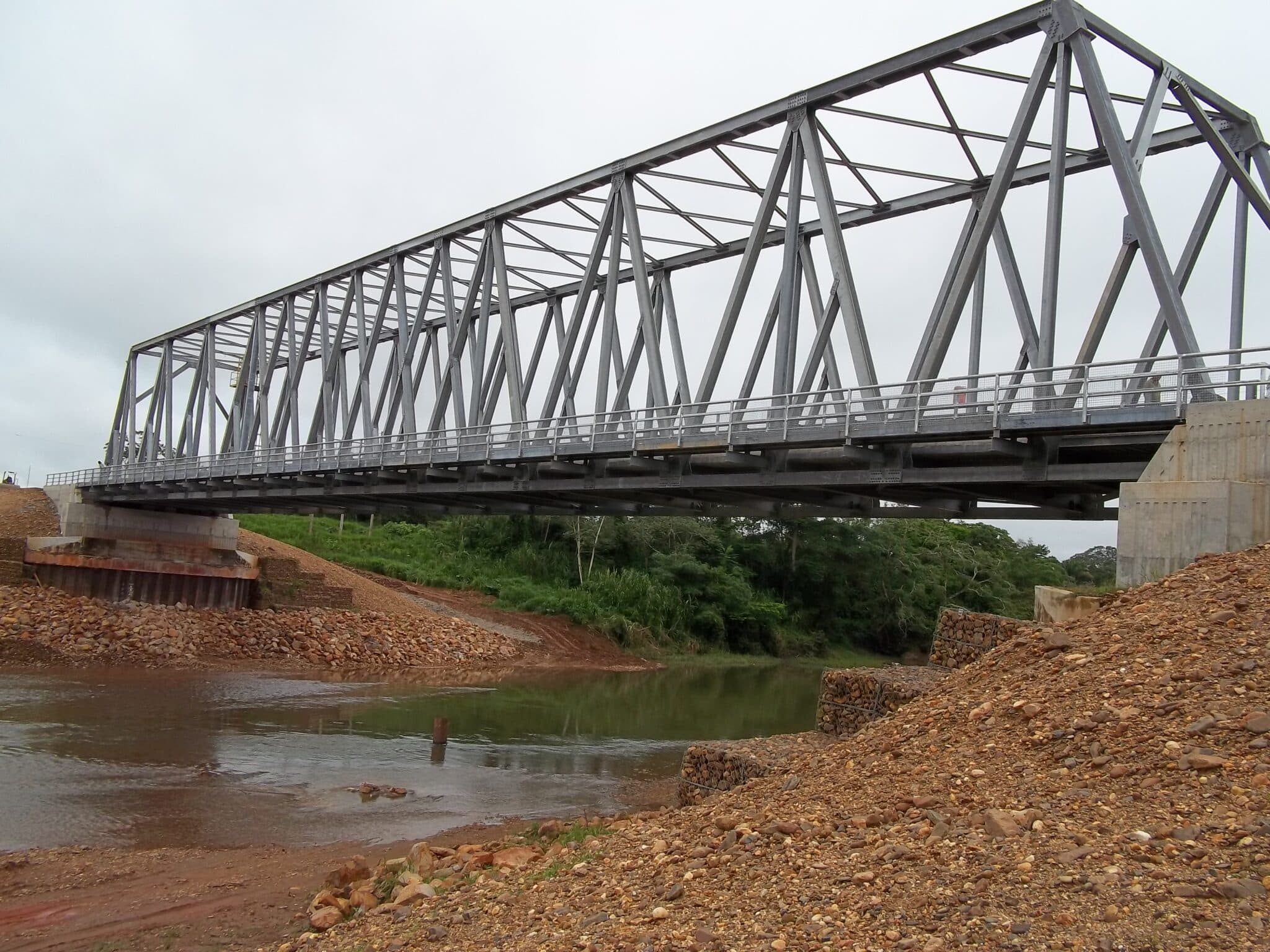
Through main civil contractor Cisco Construction Ltd of Belize, Qualter Hall was contracted to design, manufacture, supply and supervise the installation and commissioning of this single span steel modular bridge which carries traffic across the River Sittee.
Designed to withstand extreme wind loads during hurricanes and tropical storms, Kendal Bridge spans 90 meters, is 11.5 meters high and weighs approximately 300 tonnes. The 8-meter-wide bridge deck accommodates a two-lane carriageway, and a 1.3 meter wide walkway for pedestrians and cyclists is cantilevered off one side of the structure.
What work was done by Qualter Hall at Kendal Bridge?
- Qualter Hall’s in-house design team collaborated with Waagner-Biro Bridge Systems, utilising state-of-the-art 3D software to produce detailed designs for the bridge.
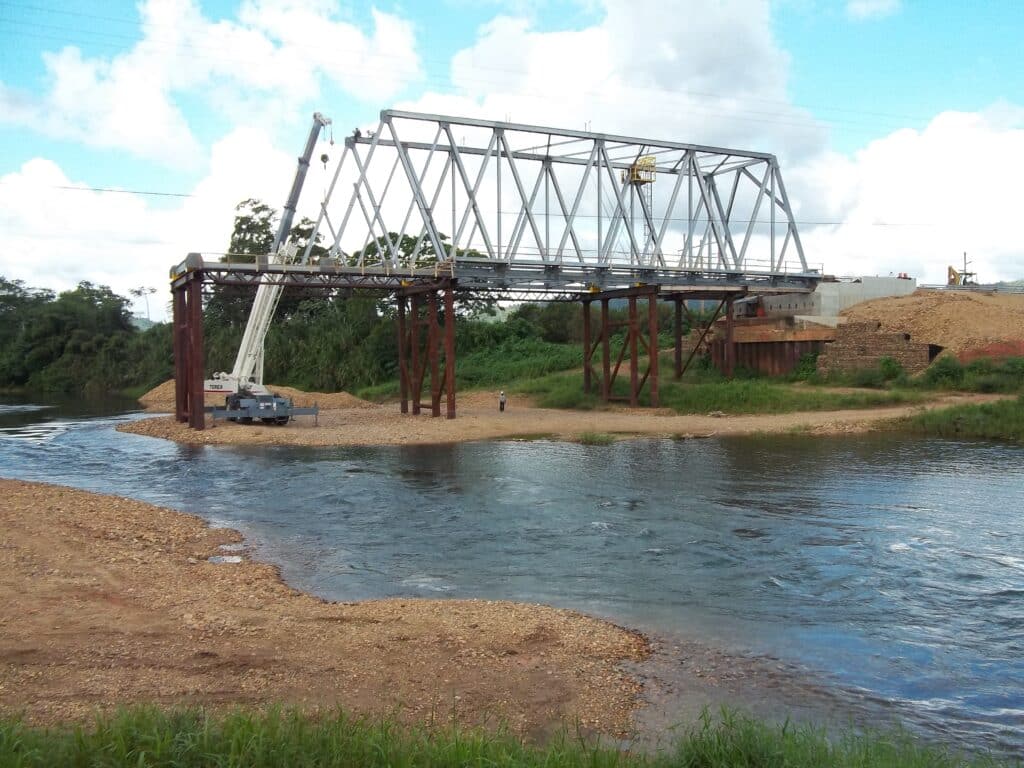
- Due to a lack of lifting equipment of sufficient capacity and jib lengths in Belize, site specific equipment was supplied and adapted to the site conditions.
- The steel structure was fully fabricated in our Barnsley facility and trial assembled prior to shipping. On arrival in Belize, engineers from Waagner-Biro Bridge Systems supervised the erection of the bridge.
- The bridge was constructed beam-by-beam, using a cantilever method and four temporary frames placed at 18m apart as auxiliary pillars. This then made it possible for a specially sourced 60 tonne crane to lift in components with a maximum weight of 4 tonnes, up to 22 metres above the riverbed. In addition, the on-site engineers had the added challenge of completing the assembly of more than 5,000 individual components and almost 7,000 bolts in as short a time as possible, due to the threat of the forthcoming rainy season.
How is Kendal Bridge Constructed?
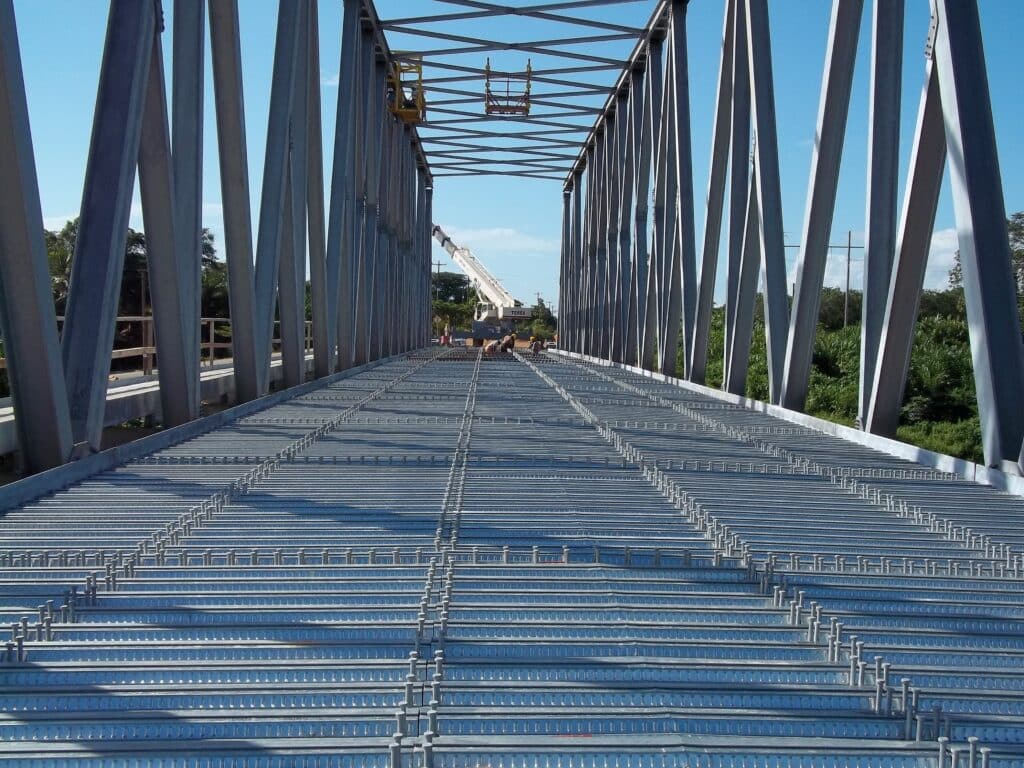
The structure is composed of a 24cm thick reinforced concrete road slab and a 3cm thick pavement, placed on top of a permanent formwork made of trapezoidal sheets and bonded to the steel frame by means of shear studs. The use of this composite structure of steel and concrete helped to optimise the structural behaviour of the steel truss, delivering a cost effective, yet state-of-the-art bridging solution.
Rolled section in lengths of up to 12 meters were bolted on-site onto the main truss using pre-stressed bolts and gusset plates, some of which weigh nearly 1.2 tonnes. These, together with the factory welded cross girders set at a distance of 4.5 meters from each other, the longitudinal girders both placed beneath the bridge deck and the two main trusses one on either side, form the basic structure of the bridge. Bolted field splices were utilised to allow for easier installation (no welding had to be done on site).
As the structure is subject to extreme wind loads during hurricanes and tropical storms, the wind bracings at the height of the upper chord and the rigid reinforced concrete slabs were designed not only to resist the resulting enormous horizontal forces, but also to deflect them to the end portals of the bridge and into the foundations. Consequently, the portals were strengthened by using box girders made of 50mm steel plates.
Kendal Bridge: Built to Withstand Storm-Force Winds
In 2008 a category 4 hurricane left a trail of destruction across central America, with the Caribbean coastline of Belize being hit particularly hard. In a flash flood that sent walls of water as high as 10 meters, the original 33-year-old Kendal Bridge was washed away. This resulted in traffic on the only north-south route in the country, the Coastal Highway, being severely restricted.
Immediately after the storm, a temporary single-lane bridge was installed to maintain the highway past this vulnerable spot on one of Belize’s most critical traffic routes. However, this was only 1.5 meters above water level and frequently submerged during heavy rainfall.
The new bridge supplied by Qualter Hall is designed to withstand extreme wind loads during hurricanes and tropical storms.