Dover Harbour Board
Qualter Hall has a long-standing and successful relationship with the Dover Harbour Board, delivering mission-critical mechanical, electrical, instrumentation, control and automation (MEICA) infrastructure across the Eastern and Western Docks. As the UK’s busiest international ferry port, the seamless operation of these systems is vital to maintaining the flow of £144 billion in annual trade.
Ro-Ro Berth Refurbishments (Eastern Docks)
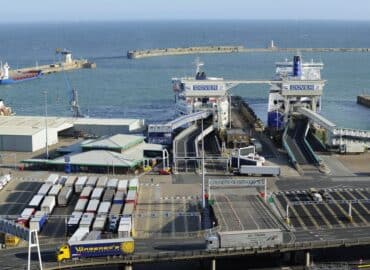
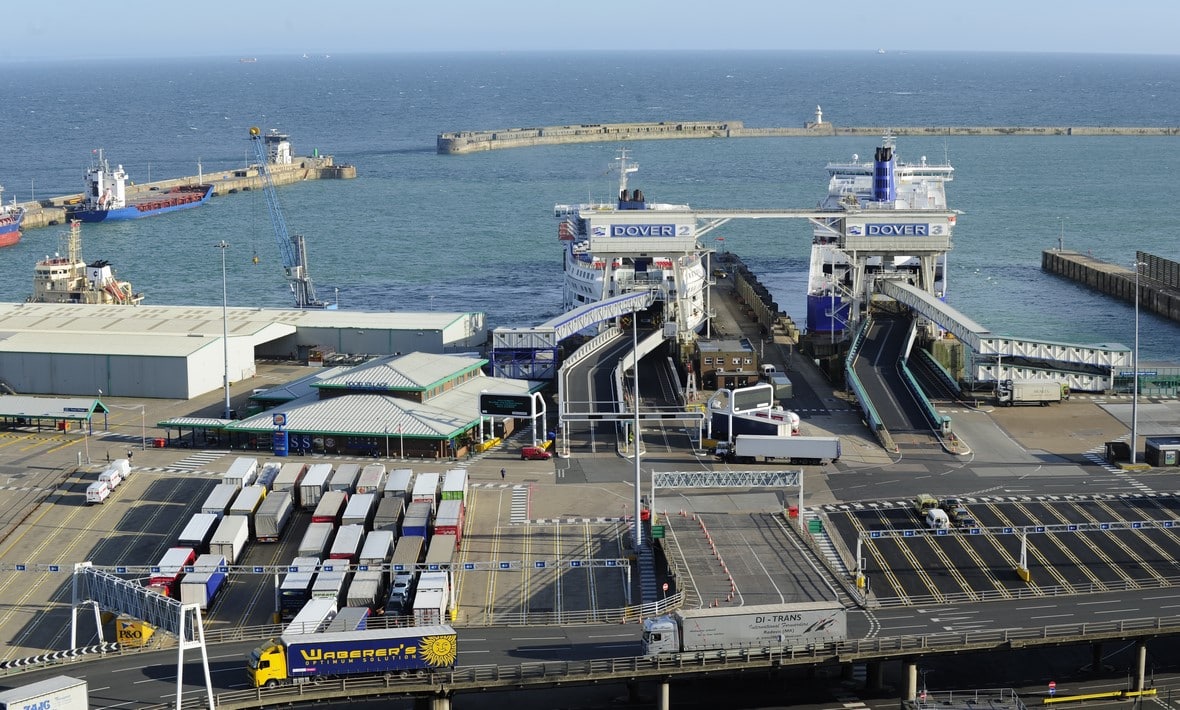
Our work on the port’s roll-on/roll-off (Ro-Ro) facilities ensures the reliable transfer of freight, passengers, and vehicles to and from ferries.
Berths 2, 3 and 7: Each berth has two vehicle bridges and a passenger access walkway. In partnership with Hollandia B.V., we executed a full refurbishment of all three berths between 2012 and 2015. This included the complete removal of old equipment and installation of new hydraulic operating systems, power units and control systems.
Qualter Hall managed the design, manufacture, supply, installation and commissioning for all MEICA equipment across these three berths.
Specialist Upgrades: Our expertise also extends to drive systems at Berth 6 and integrated safety PLC-based protection systems across Berths 2, 3, 6 and 7.
Berth ED9: In November 2025, we replaced four main hydraulic cylinders and pins responsible for powering the linkspan bridge.
The works required the careful removal of existing cylinders and pins, followed by the precise installation and fitting of new high-performance replacements.
Qualter Hall collaborated closely with the Port’s in-house engineering teams to minimize timescales and mitigate operational disruption.
Dover Western Docks Revival (DWDR)
This £100+ million regeneration development by the Port of Dover saw the transformation of the waterfront, designed to attract a host of shops, bars and restaurants with Dover’s unique backdrop of harbour, cliffs and castle, plus a new cargo terminal and distribution centre.
As part of this development programme, Qualter Hall secured the major contract through the Principal Contractor VSBW, (a joint venture between Volker Stevin and Boskalis Westminster), for the design, manufacture, delivery, site installation and commissioning of the MEICA package for the Bascule Bridge, Sector Gates, Mitre Gates and Stoplogs.
Qualter Hall delivered the complete MEICA package for the new Wellington Dock Navigation Access Channel (WDNA).
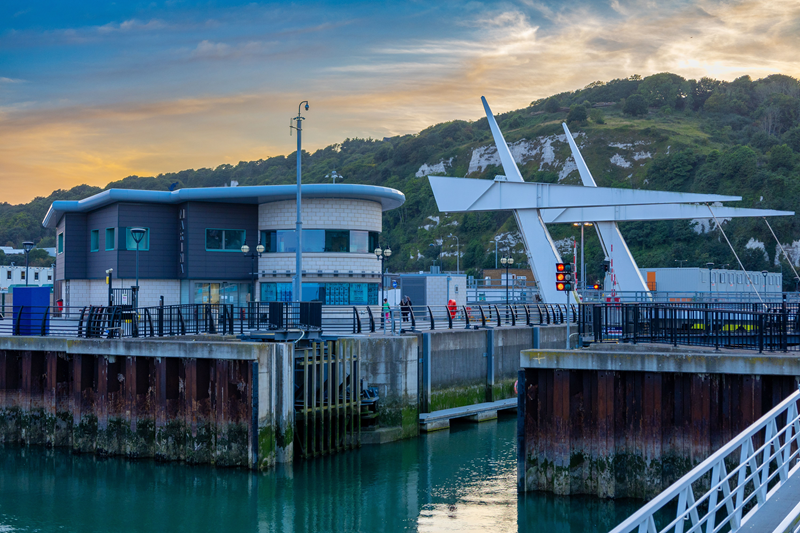
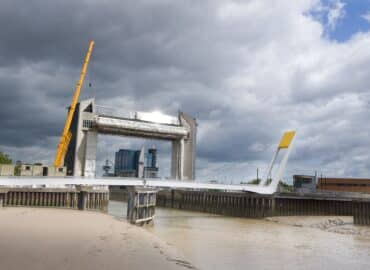
The Wellington Dock Bascule Bridge at Dover's Western Docks
This single-deck overhead cantilever bridge maintains a vital link for the community, carrying Esplanade Road from Union Street through to Waterloo Crescent. It lifts to allow maritime traffic to pass between the Wellington Dock and the new Marina. The bridge comprises a 7.3m road carriageway and two 3.6m shared paths for pedestrians and cyclists.
Qualter Hall’s scope of works for the bridge included:
- Structural Elements: Fabrication and installation of the MEICA components for the single-deck overhead cantilever bridge.
- Precision Operating System: High-performance hydraulic power pack and two powerful lift cylinders that manage the bridge's movement.
- Integrated Controls: Electrical and electronic systems, cabling and pipework required for smooth, reliable operation; and training of the bridge's on-site operators.
Strategic Water Control: Sector and Mitre Gates
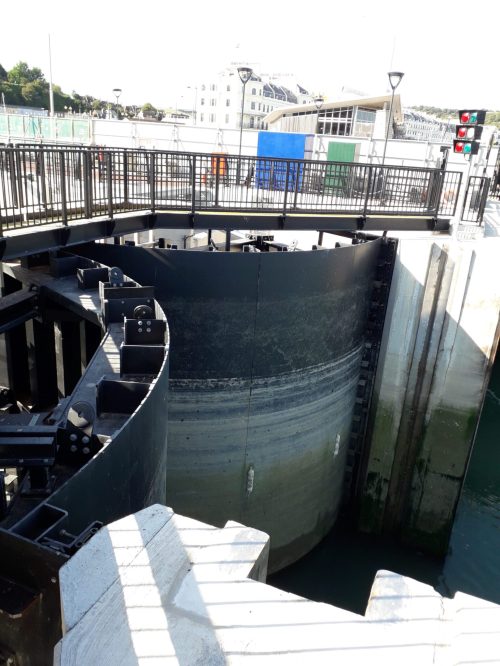
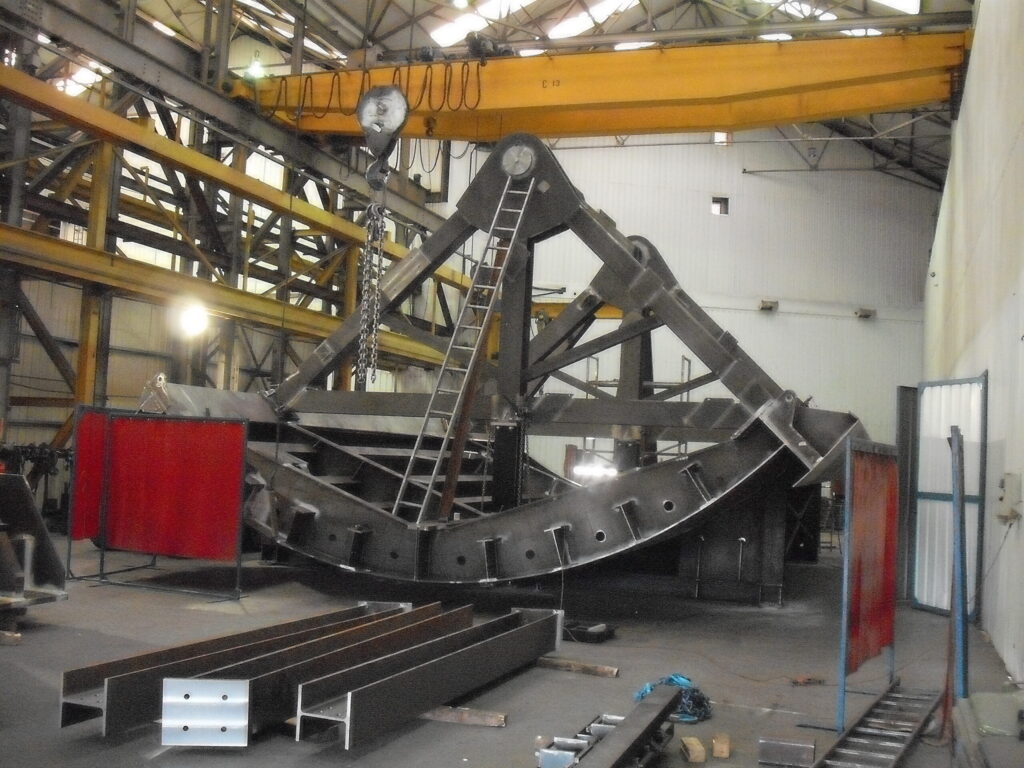
Two distinct gate systems were installed to manage vessel access and protect the inland infrastructure. Images show the gates in manufacture in our workshop, and in-situ.
- Sector Lock Gates: Standing 12m high, these gates provide essential flood protection during extreme high tides and storm surges while controlling craft access.
- Mitre Lock Gates: Located adjacent to the bridge, these 6m high gates feature two electrically operated penstocks (valves) per leaf, to manage water levels and vessel transit.
- Integrated Systems: Both sets of gates are supported by our comprehensive MEICA package, including hydraulic cylinders, cabling, and electronic controls.
Future-Proofing: Stop Logs and Dewatering
To ensure the long-term viability of the navigation access, we provided a complete dewatering solution for future maintenance.
- Maintenance Access: We manufactured a series of stop logs and a dedicated lifting beam to allow the channel to be dewatered.
- Proven Reliability: Positioned at each end of the channel and at a mid-lock point, these logs were used during the construction phase to build the channel under different water levels.
- Performance: The dock-end stop logs remained in place for a full year during construction, demonstrating exceptional seal integrity with no problematic leakage from the Wellington Dock.